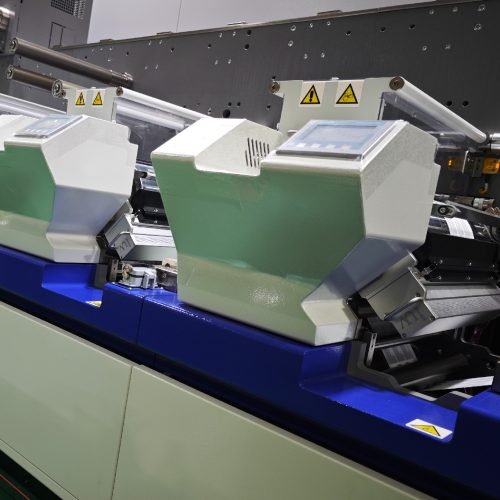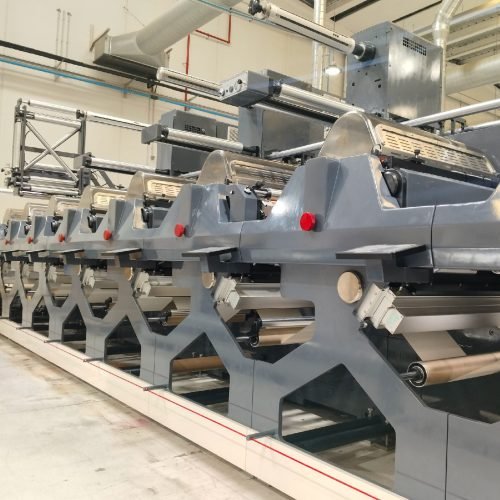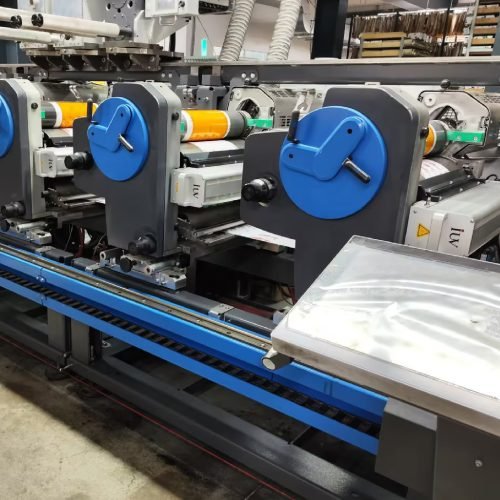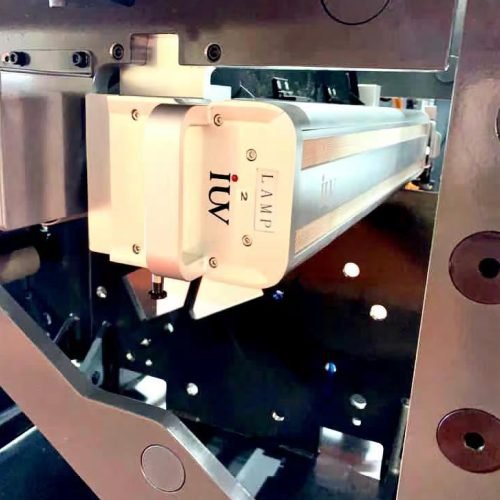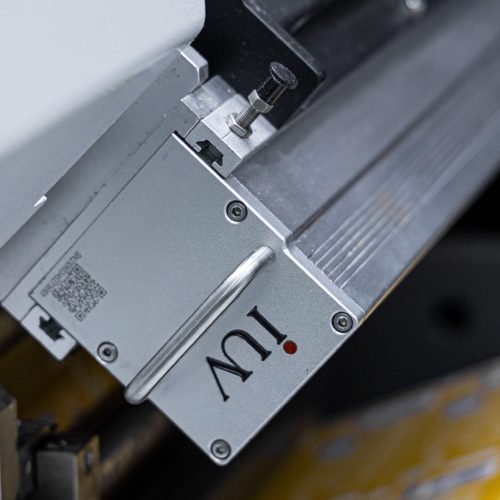
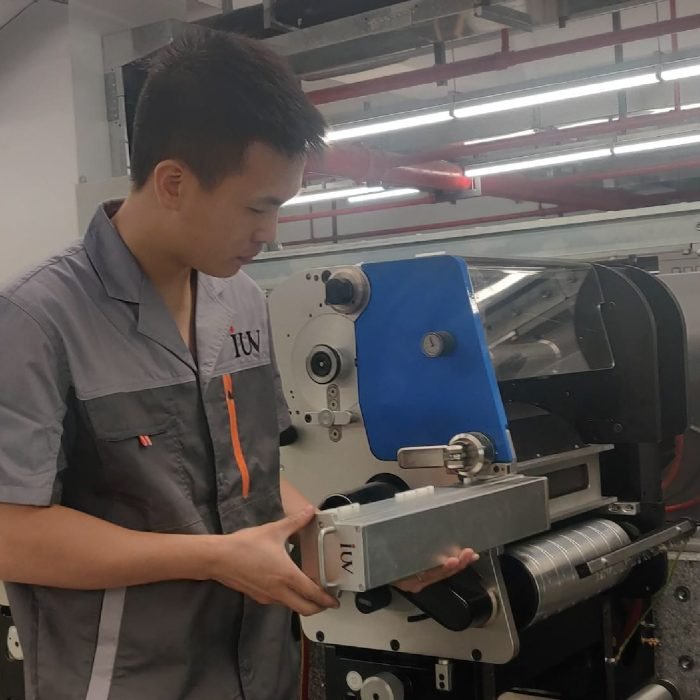
Legacy narrow web rotary presses remain widely used in label printing, flexographic production, and hybrid offset applications. Many of these machines were originally engineered around mercury arc UV curing systems. While mechanically reliable, these presses face increasing limitations related to energy consumption, thermal load, and process stability.
Transitioning from mercury arc to LED UV curing offers measurable improvements in efficiency, consistency, and operational control. A successful retrofit requires a structured engineering approach that respects the original press design while adapting curing performance to modern LED UV technology.
Evaluating Press Compatibility Before Retrofit
The first step in any retrofit project is a detailed evaluation of the existing press configuration. This includes press width, web path geometry, printing unit spacing, and available mounting locations for curing modules.
Narrow web rotary presses often have limited installation space due to compact layouts. LED UV systems benefit from smaller form factors, but airflow paths, electrical routing, and access for maintenance must still be considered during planning.
A compatibility assessment ensures that curing modules can be integrated without interfering with print units or web handling components.
Understanding the Differences Between Mercury Arc and LED UV Curing
Mercury arc lamps emit a broad UV spectrum and require warm-up time to reach stable output. Their curing performance depends on thermal equilibrium and reflector efficiency. Output degradation occurs gradually as lamps age.
LED UV systems emit narrowband wavelengths, typically optimized for modern photoinitiators. They deliver instant, repeatable irradiance without warm-up cycles. Output remains stable over long operating periods.
Recognizing these differences is essential when adapting inks, coatings, and curing parameters during retrofit.
Assessing Ink and Coating Compatibility
Before hardware installation, ink systems must be evaluated for LED UV responsiveness. Many legacy presses run inks formulated for mercury UV exposure, which may not cure efficiently under LED wavelengths.
Ink suppliers should be consulted to confirm LED-compatible formulations suitable for flexo, offset, or rotary screen applications. In some cases, minor formulation adjustments are sufficient. In others, full ink replacement may be required.
This step prevents undercure, adhesion failure, and surface defects after retrofit.
Mechanical Integration of LED UV Modules
Mechanical installation focuses on positioning LED UV modules at optimal curing distances while maintaining consistent web clearance. Unlike mercury lamps, LED systems do not rely on elliptical reflectors, which simplifies alignment.
Mounting brackets must account for vibration, thermal expansion, and press accessibility. In narrow web presses, modular or segmented LED arrays often provide better coverage and easier serviceability.
Correct mechanical integration ensures uniform irradiance across the web width and minimizes shadowing effects.
Electrical and Control System Integration
Electrical integration represents a critical phase of the retrofit. Mercury arc systems typically operate with high-voltage power supplies and analog control interfaces. LED UV systems use low-voltage DC power with digital control capabilities.
Retrofit projects often require new power distribution, control wiring, and safety interlocks. Integration with the press PLC allows curing to be synchronized with press speed, web movement, and emergency stop functions.
Instant on/off capability must be fully integrated into press logic to realize operational benefits.
Thermal Management and Cooling Considerations
Although LED UV systems generate less radiant heat, they still require effective thermal management to maintain diode efficiency and lifespan. Active cooling, usually via forced air or liquid systems, must be planned carefully.
Legacy presses may not have dedicated cooling zones for curing units. Retrofit designs should ensure adequate airflow without disrupting ink drying, web stability, or operator safety.
Proper cooling design prevents output degradation and ensures long-term curing consistency.
Adapting Process Parameters After Retrofit
Once installation is complete, process parameters must be recalibrated. LED UV curing often requires different irradiance and dose settings compared to mercury arc systems.
Press speed, ink film thickness, and curing distance should be adjusted systematically. Radiometric measurement helps verify delivered dose and confirms that curing energy reaches required thresholds.
Gradual optimization avoids excessive exposure while ensuring full cure across all printed areas.
Managing Adhesion and Surface Energy Challenges
During retrofit, adhesion performance must be closely monitored, especially on films, foils, and coated substrates. LED UV curing interacts differently with surface energy and ink wetting behavior.
Surface treatments such as corona or plasma may require adjustment. In some cases, improved curing control leads to better adhesion due to reduced thermal stress on substrates.
A structured testing phase ensures reliable performance before full production resumes.
Training Operators and Maintenance Personnel
Successful retrofitting extends beyond hardware installation. Operators must understand new curing behaviors, control interfaces, and maintenance routines.
LED UV systems reduce lamp replacement frequency but introduce new considerations related to cooling, optics cleanliness, and electronic diagnostics. Clear training minimizes downtime and ensures consistent operation across shifts.
Well-trained teams extract maximum value from LED UV upgrades.
Verifying Production Stability and Quality Output
After retrofit, extended production trials should confirm curing consistency across different job types. This includes solid coverage, fine text, variable data, and high-speed runs.
Quality metrics such as adhesion, abrasion resistance, and color stability should be evaluated under normal production conditions. Stable results indicate a successful transition from mercury arc to LED UV curing.
Verification builds confidence in long-term performance and customer acceptance.
Long-Term Operational and Economic Benefits
LED UV retrofitting delivers benefits beyond immediate curing improvements. Energy consumption decreases, maintenance intervals extend, and press availability increases.
Reduced heat load improves mechanical stability and extends component life. Faster setups and cleaner ink systems contribute to higher throughput and reduced waste.
For narrow web converters, these advantages strengthen competitiveness without replacing existing press assets.
Conclusion
Transitioning legacy narrow web rotary presses from mercury arc to LED UV curing is a strategic investment in efficiency, control, and sustainability. A successful retrofit requires careful evaluation, precise integration, and disciplined process optimization.
When executed correctly, LED UV retrofitting modernizes curing performance while preserving the mechanical strengths of proven press platforms. This balance allows label printers to meet modern production demands with confidence and consistency.