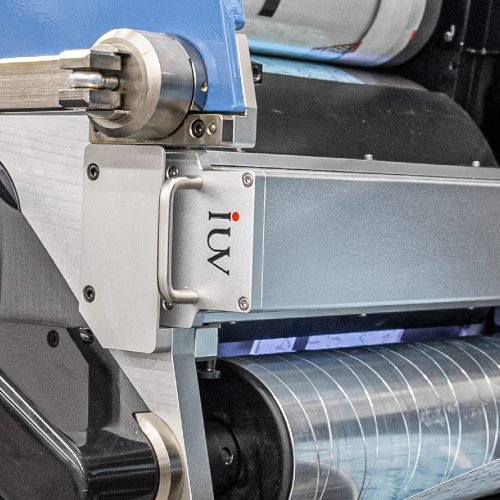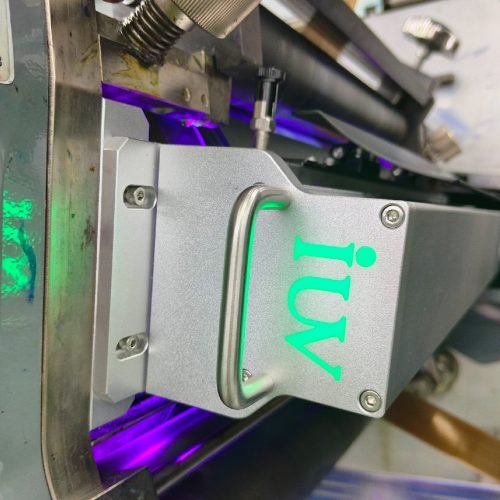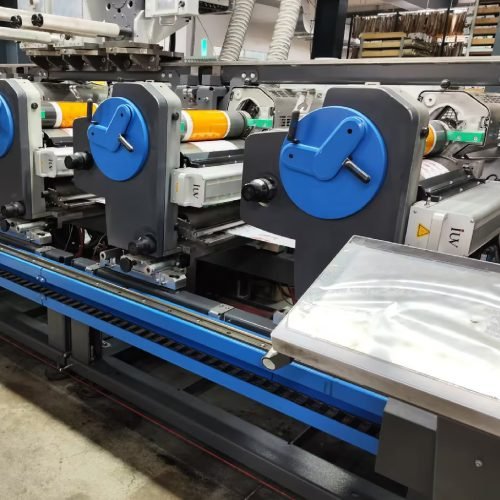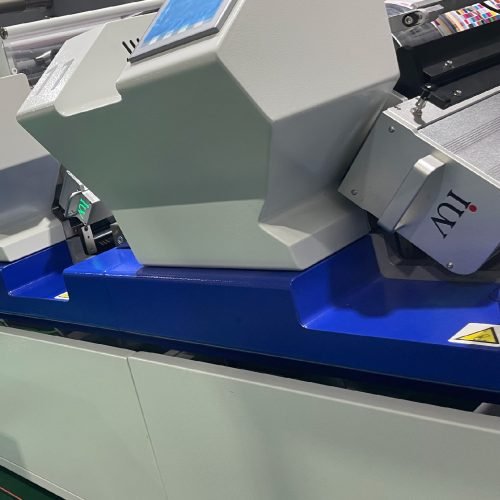
Hybrid printing combines conventional offset or flexographic processes with LED UV curing technology to enhance print quality and efficiency. In narrow web label production, maintaining consistent ink transfer and adhesion across multiple stations is essential. The integration of UV LED curing introduces a precise and controllable energy source, which directly impacts ink polymerization and overall print performance.
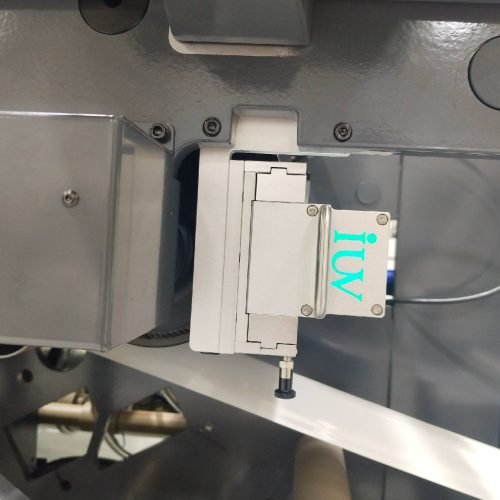
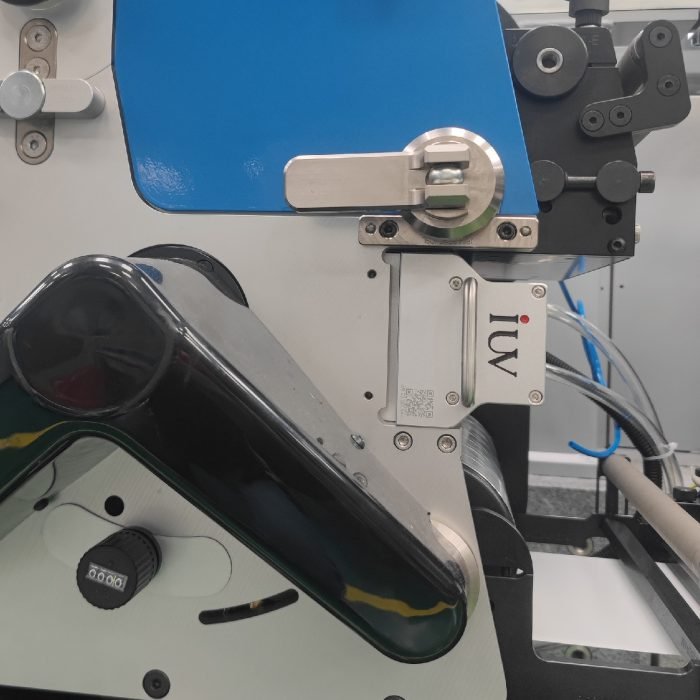
In hybrid presses, UV LED systems are typically installed either interstation or at the end of the press. Interstation curing stabilizes the ink layer, preventing smearing and maintaining sharp dot definition, while end-of-line curing ensures complete polymerization. The ability to control irradiance and wavelength allows operators to fine-tune curing for various ink types and substrates, a crucial factor in achieving consistent results.
Enhancing Print Sharpness and Detail with LED UV
One of the primary advantages of UV LED systems is the uniform energy distribution across the web. Consistent irradiance prevents undercured or overcured areas, which can compromise image quality. In narrow web flexographic and hybrid presses, fine detail reproduction depends on precise ink film curing, particularly when using high-resolution anilox rolls.
The spectral output of UV LED units matches the photoinitiators in specialized inks, enabling rapid and uniform polymerization. This is particularly beneficial for complex graphics and multi-color label sequences, where maintaining registration and preventing dot gain are critical. By adjusting LED intensity and positioning, printers can achieve consistent gloss, color density, and edge sharpness across the production run.
Controlling Ink Adhesion and Layer Stability
Hybrid printing often involves wet-on-wet processes, where each ink layer must cure enough to accept subsequent layers without mixing. UV LED curing offers immediate polymerization, which stabilizes the ink film. This prevents ink from spreading or contaminating adjacent layers, preserving color fidelity and reducing rework.
Different substrates, including coated papers, films, and synthetics, respond differently to UV energy. LED systems allow for precise energy adjustment to accommodate substrate sensitivity, ensuring reliable adhesion and minimizing the risk of delamination or surface defects. In high-speed operations, this adaptability is essential for maintaining throughput without sacrificing quality.
Optimizing Production Speed and Efficiency
Integrating UV LED curing into hybrid presses improves overall production efficiency. LEDs provide instant-on curing with no warm-up time, allowing faster job changes and reducing downtime. Unlike conventional mercury lamps, LED systems generate minimal heat, which prevents substrate distortion and allows tighter control over web tension.
Adjustable power and modular lamp designs make it possible to match curing levels with press speed and ink coverage. In narrow web presses, where high-speed operation is common, maintaining consistent polymerization across variable speeds ensures fewer defects and higher productivity. The result is a smoother workflow and reduced waste, essential in modern label production.
Reducing Energy Consumption and Environmental Impact
LED UV systems are significantly more energy-efficient than traditional mercury lamps. They consume less electricity while delivering equivalent or superior curing performance. Lower energy requirements reduce operational costs and heat load, which also minimizes the need for extensive cooling systems.
The environmental benefits extend to eliminating mercury disposal concerns and reducing carbon footprint. For hybrid printing facilities, this represents both regulatory compliance and a competitive advantage. Sustainability initiatives in packaging and labeling increasingly favor processes that minimize energy consumption and chemical emissions.
Fine-Tuning Hybrid Press Integration
Successful hybrid press operation requires careful integration of UV LED modules. Lamp placement, distance to the substrate, and alignment with print stations must be precisely controlled. In multi-color flexographic printing, interstation curing levels need calibration to avoid overcuring early layers while ensuring proper bonding for subsequent inks.
Regular monitoring and maintenance of LED output maintain stable irradiance and consistent print quality. Measuring tools can assess energy distribution, allowing operators to make precise adjustments and maintain high-quality output over long production runs. Proper integration ensures that the hybrid system delivers predictable and reproducible results.
Achieving Consistent Quality Across Substrates
Substrate variability is a common challenge in label printing. Coated papers, films, and synthetics have different surface energies, which affect ink adhesion and curing. UV LED systems provide the flexibility to optimize energy levels for each substrate, ensuring complete polymerization without compromising surface integrity.
Hybrid presses benefit from this adaptability because they often handle diverse jobs in short production runs. By calibrating LED output according to substrate and ink combination, printers can maintain uniform gloss, color density, and mechanical strength. This reduces rejects and enhances customer satisfaction.
Supporting Long-Term Print Reliability
Consistent UV curing directly correlates with print longevity and performance. Properly cured inks resist abrasion, chemical exposure, and environmental factors, which is especially important for labels exposed to handling or outdoor conditions. UV LED systems enable precise control over curing depth, ensuring durable print without compromising flexibility.
In addition to print durability, long-term maintenance of LED systems is straightforward. Regular cleaning of optics, verification of irradiance, and monitoring of cooling systems ensure that performance remains stable. This minimizes downtime and extends equipment lifespan, supporting efficient and reliable hybrid press operation.
Conclusion
Integrating UV LED systems into hybrid printing environments significantly improves print quality, operational efficiency, and substrate adaptability. By controlling irradiance, wavelength, and positioning, printers can optimize polymerization, enhance ink adhesion, and maintain high-resolution output across multi-color sequences. Energy efficiency and reduced heat generation provide both economic and environmental benefits. For narrow web label production, UV LED curing is a key technology in achieving consistent, high-quality, and reliable results in hybrid presses.